
Fire Weather: On why tech’s worst-rated managers are not the problem
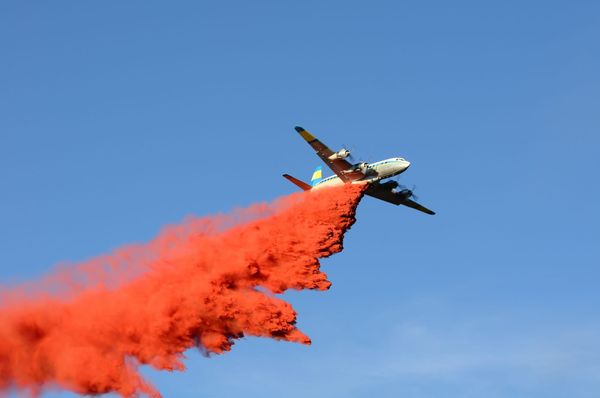
This week, more than 330,000 people have been driven from their homes by wildfires burning across France and Spain. France has already recorded more than three times its annual number of fires, and its soil moisture is the lowest ever measured this early in the summer. Near Bordeaux, crews are cutting giant firebreaks to keep the flames away from the city. They cannot control the heatwave or the drought that set the conditions, but they can decide where to draw the line and defend it.
I am heartbroken for everyone. I grew up in fire-ravaged gold country in Northern California and have experienced wildfires personally. I’m set to travel to Camp Chateau in France next month, and I am watching the progress of those fires closely. I also have been catching up on the latest survey results on burnout in tech, and for design those metaphorical fires are also the worst on record.
The optimism burned off
A year ago, Lenny Rachitsky and Noam Segal ran the first large-scale survey of how tech workers feel about their jobs. The TL;DR was four words long: burned out, but optimistic. People were exhausted, but they still believed the work was heading somewhere worth going.
The 2026 survey dropped the second half of that sentence. Significant burnout rose from 44.7% to 55.7% in a single year, which means being burned out is now the majority experience of working in tech. Career optimism fell from 54.8% to 48.7%. More than half of tech workers, 53%, say they would steer a newcomer away from their own role, a career net promoter score of minus thirty-nine. A third of the people who describe themselves as optimistic still would not recommend the path they are on.
The ground was already dry when the first survey ran. Higher interest rates, the US Tax Code Section 174 changes that made software labour harder to deduct, the end of the cheap-money decade: all of it had pulled the moisture out of the organisational landscape long before this.
That was the drought.
The wind is the new part
AI did not start this fire. The macroeconomic drought did that. But AI is what turned a bad fire season into a year of record firestorms, because it changed how fast everything moves and how far it can spread.
Eighty-two percent of tech workers now say AI makes them measurably more productive.
That sounds positive until you read what they mean by it. When the survey asked people to describe the change in their own words, “better at my job” turned out to mean producing more, faster, and not higher quality. I can do more, faster, but not better, one respondent wrote. Another: I’m amplified, but my brain is rotting, and my work feels worse. The speed AI unlocked did not become value or rest.
There is a point where a fire stops needing the wind at all. Near Bordeaux this week, the blaze grew hot enough to build its own thunderstorm: a pyrocumulonimbus, a fire-generated storm cloud that French authorities say the country has never seen before. (That is the most fascinating term, but I am grateful this is in writing, because I cannot for the life of me pronounce it.) The fire’s own heat drives air miles into the sky, where it condenses into towering cloud, flings embers tens of kilometres past the front, and throws down lightning that starts fresh fires of its own. NASA once called it the fire-breathing dragon of clouds. Essentially, the fire had started making its own weather.
The tech firestorm has learned the same trick. Every productivity gain resets the baseline; the higher baseline demands more; the demand manufactures fresh exhaustion, which the next tool is sold to relieve. The squeeze is no longer coming only from the macroeconomy, or from any single executive. The system has begun generating its own gale-force wind and lightning.
This is why the thing people fear most is not the thing the headlines keep promising them. Only 22% of tech workers worry about losing their job to AI. Far more, 51%, worry about being expected to do more work for the same pay. We are always promised that if we adopt new technology there will be more rest, and yet, somehow the treadmill just keeps speeding up and people are getting very, very tired.
The survey results reference Nikhyl Singhal’s term for this: smiling exhaustion. The burnout of a few years ago was grim, all overhead and no agency. This one is less obvious.
People are shipping again, compensation has climbed for a subset of workers, whole roles feel reborn for the chosen: like a stunning orange and burgundy sunset during smoke season that looks beautiful from a distance. But, the danger is like a smouldering underground fire, burning almost invisibly down under the surface of packed leaves or peat, and those are the hardest of all to put out. The biggest problem with these types of ground fires is that it seems everything is under control until they get a hold of a new type of fuel, burning whole forests overnight by coming up via the root system.
Where two fires meet
In both Spain and France, the exhausted firefighting teams are facing multiple fronts simultaneously, much like our software teams.
Designers and researchers are, in the report’s words, at the epicentre of AI anxiety across the board: “Among designers, 63% feel ‘overwhelmed by the pace of change’ and 61% feel ‘tired’, the highest of any role.” Sixty-one percent feel the comp squeeze directly, the most of any discipline. Designers and researchers report the lowest willingness of anyone to recommend their field.
There is a reason design caught fire first. AI did not replace designers; it commoditised their output. Wireframes, layouts, interface variations, visual exploration: the things that were scarce are now cheap. Nielsen Norman Group’s read on the year is that the market has stopped paying for artefacts and started paying for judgement, breadth, and the ability to decide what is worth building at all. The discipline’s driest fuel, the production work, is exactly what the wind found first.
Now hold two facts next to each other. Designers are the most AI-anxious, most-squeezed discipline in tech. And the survey also finds that the worst-rated managers cluster in design and data. The design manager, then, is standing precisely where two fires meet: managing the most combustible team in the building while being rated, personally, as part of the problem.
This spring I sat in a room of design leaders in Amsterdam at a Hatch Leadership Atelier and listened to what they were grappling with. It was not, as you might expect from the ratings, a room full of people who could not do the job.
The recurring subjects they named were the opposite. They were trying to keep their people from burning out. They were trying to hold space while roles dissolved under them. They were trying to protect designers whose work was being hollowed out, and to hand down enough of their own judgement that quality would survive the speed. One after another, they described trying to build something their team could navigate by while they themselves had no map of the terrain.
None of that is incompetence. It is the patient, preventive work of a forest ranger, done by the same people the survey has just rated as the problem.
False promises
The industry promised that AI would clear the administrative undergrowth and free managers to do the strategic, human work only they can do. That is not what happened. AI did not take the drudgery off managers’ plates. It added a new layer of it. This problem cuts across design, product, and engineering.
Managers now spend their time validating AI output and catching workslop that looks professional and polished but turns out to be garbage. They coach teams on tools that change constantly. They referee the anxiety of people who are frightened the same tools will replace them. Meanwhile the organisational squeeze got worse underneath all of it: the average manager’s span of control has climbed to around twelve direct reports, up roughly half since 2013, as companies flatten hierarchies and call the result agility. More people to hold, less time to hold them, and a new category of oversight work layered on top.
And then there is the backfire. In wildfire, a backfire is a blaze you set on purpose to starve the main fire of fuel. Done right, it saves the forest. Done wrong, it jumps the line and becomes its own catastrophe. “Use AI or lose your job” was lit as a backfire, a way to force adoption before the competition got ahead. It has jumped the line. As one respondent in Lenny’s survey put it: We used to adopt new technology because we were excited about the cool new things we could do. Now all we hear is ‘Use AI or you will lose your job’—and then people get fired anyway. I hate it.
You cannot mandate your way out of a fire you helped create.
The worst-rated managers in tech
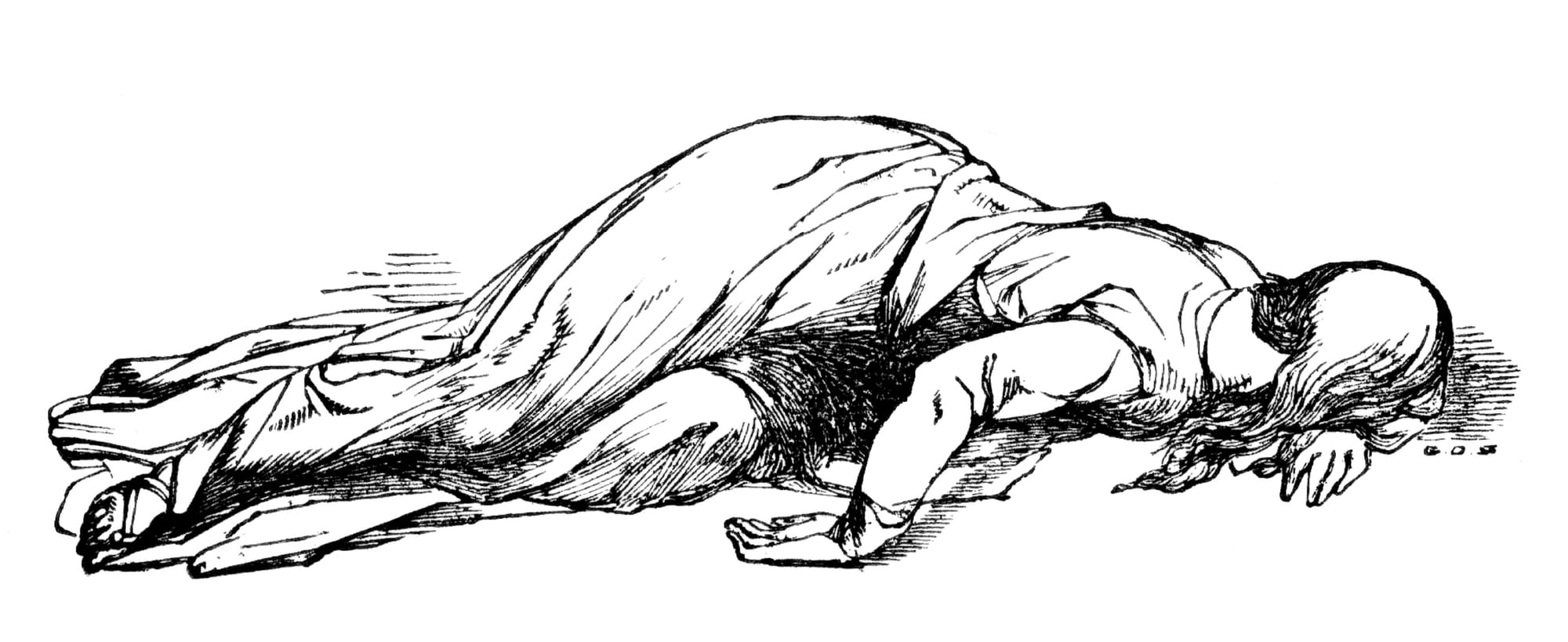
Across the entire dataset, manager effectiveness is the single strongest driver of burnout, stronger than role, company size, or how someone feels about AI. Workers with a genuinely effective manager report roughly 65% higher job enjoyment. And only 25.5% of tech workers rate their manager as highly effective, while 36.5% rate theirs as ineffective. The most powerful retention lever in tech is also the most neglected. And its lowest readings are in design.
It would be easy to read that as a story about bad managers. When I look at what design managers are being asked to do in 2026, the pattern is clear: the ratings fell without any individual getting worse at the job. The role was overloaded past the point of what a single human can do effectively for long periods, and then measured as if nothing had changed.
Because look at what the demand side now expects, all at once.
- Be AI-fluent and be scored on it as a distinct competency.
- Stay hands-on and keep raising the craft bar, with tool-stacks that shift every month.
- Think in platforms, not features, while learning what agentic actually means.
- Coach your people through an ambiguity nobody has resolved, while roles are blurring.
- Influence across teams you do not control.
- Absorb leadership’s AI expectations, which are frequently driven by fear rather than plans.
- And then my favourite, “be more strategic,” without any clarity from leadership on what that means.
Do all of this while managing more people than ever before, and maybe also while being a player-coach.
Each of those is reasonable on its own. The problem is that they expand in every direction at the same time, against a fixed amount of a person, while very few organisations have updated their reviews, structures, or expectations to match how the work changed. So, the manager is assessed against a standard that grew while they were not looking, and is contradictory, and is undefined.
Do you know what the worst part is? This actually costs companies revenue. I wrote last year about how happier managers lead to more productive teams and a 3X increase in value return. This is a crisis, cutting off the long-term potential of profits for short-term gain while burning out an entire generation of designers.
Firebreaks
I want to be careful here, because there is a seductive and wrong way to end a piece like this. I almost went there in the Fire Happens section of this personal essay last year. The mistake is to reach for the language of adaptation: become fire-adapted, evolve to survive the blaze like manzanita, learn to thrive in the new normal.
I am not going to do that, and not only because real fires are burning through forests near Bordeaux as I write. To call this a new normal is to agree that the fire is a natural condition we can only brace against. The wildfires in France and Spain are driven by a climate we changed.
The firestorm in tech is driven by choices we made about pace, about headcount, about how we deployed a genuinely powerful technology. A thing made of choices can be chosen differently.
I am not anti-AI across the board, nor am I an AI evangelist. I have real reservations about the ethics of how these systems are built and pointed. But AI is a technology, not a destiny, and we retain the agency to choose smarter, lower-impact ways to use it, in service of better work rather than in service of an illusion of progress that is currently feeding the burnout.
The productivity gains can be real. The question is whether we spend what we gain on breathing room or shovel it all back into an unsustainable baseline. That is a decision, not a forecast.
Which brings me back to the crews outside Bordeaux. They cannot end the drought or turn the wind. They can decide where the firebreak goes and defend it. A manager, right now, without waiting for their organisation to fix itself, can cut firebreaks too.
- Define what “done” means so that AI output has a quality gate instead of flooding straight to production.
- Protect one block of deep-work time and hold it against meetings.
- Decide, out loud, what the team is not going to chase this quarter.
- Absorb and filter the tool-of-the-week noise so the team is not drowning in it.
- Corner management on what their strategy is, when they tell you to be more strategic.
None of these require org-wide authority. All of them are lines you can hold with the ground you already stand on.
This is the shift I care about most: from firefighter to forest ranger.
A firefighter runs at whatever is burning, all suppression, no prevention, no say over the conditions. A ranger does the patient, unglamorous work that means fewer catastrophic fires in the first place and does it with the authority and the time to plan across a whole territory, like building firebreaks in the spring long before summer hits. The design managers rated worst in that survey are not failed rangers. They are rangers being handed hotshot firefighter assignments with no line-cutting budget and no map and then blamed for the devastation.
If you are one of them, being handed the fire and worried you are failing at it, I would like you to hear the actual finding: the conditions changed, not you. And if you are a designer watching your own manager fail to hold the line, understand that they are very likely standing exactly where multiple fires meet, without the reserves to fight any single fire well. (Ok, some are just terrible. Sorry.)
The move from firefighter to ranger is learnable, even when the weather is not yours to change. That inflection point, from reacting to preventing, from absorbing the fire to deciding where the line goes, is the work I do with design managers one to one. Not a sales funnel. A confidential space to figure out, honestly, what is on fire and what you can still protect, as an ally rather than another voice telling you to be more resilient.
We did not start this fire. But we are the ones deciding, right now, whether to keep feeding it, or to pick up a shovel and choose where the line holds.
Written by